There is a moment in every event lifecycle where everything is still negotiable.
Before ink hits paper.
Before dates are locked.
Before expectations calcify into contract language.
And in our experience, one of the most expensive oversights an event planner can make happens in that exact moment.
This article is not anti–in-house AV.
It is not anti–venue.
It is not anti–hotel.
We need each other. All of us.
This is simply about understanding how revenue works inside large venues, and how a small clarification up front can prevent a six-figure surprise later.
We are big believers in what we call “next time notes.” After every event, our crew journals what they would repeat and what they would adjust. No guilt. No shame. Just growth.
The stories behind this article are successful events. Great shows. Happy clients.
But the financial friction they experienced could have been avoided entirely.
Let’s walk through why.
How Venues Actually Make Their Money
Nearly every sizable convention center or hotel has in-house AV. Just like they have in-house food and beverage.
That is not a coincidence.
Venues operate on multiple revenue streams:
- Guest room block
- Food and beverage minimum
- Meeting space
- In-house AV
- Power, internet, rigging
The ballroom might appear “complimentary.” The room rate might feel aggressive. The F&B minimum might look competitive.

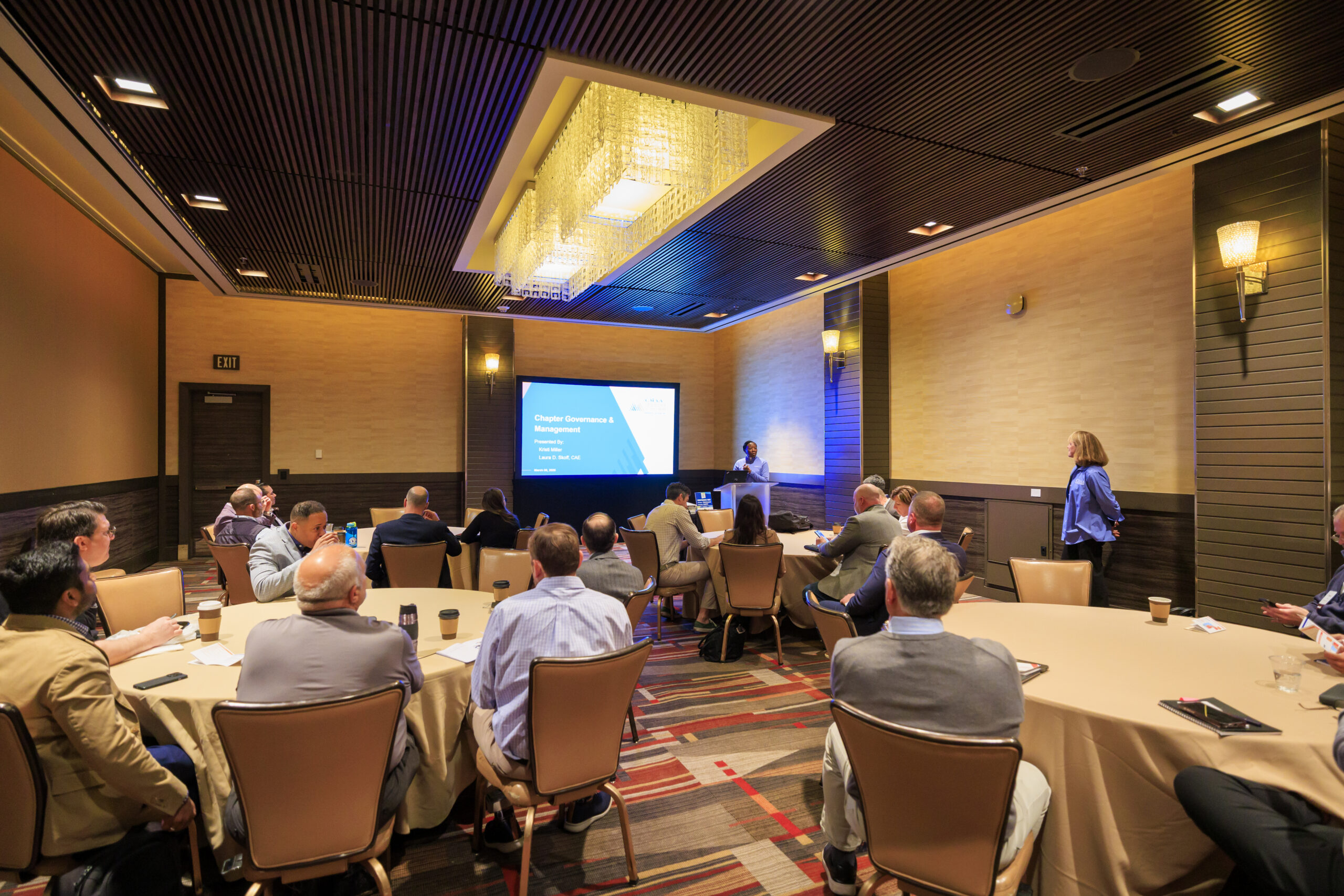
Photo by Iron Lotus Creative / Daniel Moody
But internally, the sales team is stacking total revenue when they present your event to their leadership for approval.
Let’s use a clean example.
Imagine:
- Room rate: $179
- F&B minimum: $50,000
- Ballroom: included
- In-house AV projected: $200,000
In many venue agreements, the property receives a commission or revenue share from in-house AV, often around 50 percent.
That means in this scenario, the venue is counting on roughly $100,000 from AV as part of the total value of your event.
That number matters.
It may not be visible to you, but it is very real inside the venue’s internal P&L.
And that is where things begin to shift if expectations are not aligned early.
What Happens When You Change the AV Plan Later
Now imagine you sign the contract.
You lock the room block.
You agree to the F&B minimum.
Months later, you inform the venue that you are bringing in an outside production company.
From your perspective, that feels reasonable. It is often allowed in the contract, sometimes with conditions.
From the venue’s perspective, a projected $100,000 revenue stream just evaporated.
That gap has to be filled somewhere.
The only remaining line items left to adjust are:
- Power
- Internet
- Rigging
And this is where planners sometimes encounter shocking invoices.
Five-figure internet becomes six-figure internet.
Power rates feel astronomical.
Rigging labor spikes.
Are these charges technically allowed? Often yes.
Are they emotionally jarring? Absolutely.
What makes it painful is not that money must be paid. It is that it was not expected.
And budget surprises months into planning are the worst kind.
This Is Not About Villains
There is nothing evil about this model.
Venues are not villains.
In-house AV providers are not villains.
Outside production companies are not heroes.
This is math.
If a venue discounted ballroom rental and kept room rates competitive because they expected AV revenue, they must protect their margins.
The friction happens when:
- The venue expected AV revenue.
- The planner did not understand that expectation.
- The production decision changed after the contract was signed.
Now everyone feels blindsided.
We have seen recent scenarios where internet that should reasonably cost a few thousand dollars turned into a six-figure line item. Not because anyone was malicious, but because revenue had to be recaptured.
And by then, the event was too close to move.
The Conversation That Should Happen Before Signing
Before you sign your venue contract, ask:
- If we use outside production, what fees apply?
- What are your power rates?
- What are your internet rates?
- What are your rigging policies?
- Are those negotiable?
Put real numbers in writing.
If the venue needs to adjust room rates or F&B minimums because you are not using in-house AV, that is fair.
Would you rather:
- Increase your F&B minimum and elevate the guest experience,
or - Absorb six figures in surprise internet fees later?
Transparency protects everyone.
The Real Estate Analogy
No one buys a home without clarifying closing costs, inspection terms, or appliance inclusions.
Yet hotel contracts are often equal in size to a mortgage.
And many planners sign them annually.
The events industry is less regulated than real estate, but the dollars are just as real.
Clarify the refrigerator before you sign. Not during move-in.
Why Long-Term Production Partnerships Help
One of the biggest challenges during sourcing is estimating technical requirements.
How much internet?
How much power?
How many motor points?
If you use the same production partner year after year, patterns emerge.
You learn that your program requires:
- A 30MB hardwired dedicated line backstage
- 200A three-phase power
- 16 half-ton motor points
Those numbers allow venues to quote fairly and early.
That predictability stabilizes your budget.
If you are newer to production terminology, our downloadable Production Glossary is designed to help planners decode the language before negotiations begin.
We also break down how crew sizing and scope evolve in our post on small, medium, and large event production teams, which can help you estimate realistic infrastructure needs.
A Quick Story from the Field
In one recent case, a client chose outside production for a $200,000 general session because they needed a higher level of execution than in-house could provide.
Their outside partner quoted $150,000 for stronger results.
But because power and internet were not clarified early, those line items ballooned to over $100,000 once in-house AV was removed.
The result?
The same money moved around the spreadsheet, just in less satisfying ways.
Had expectations been set before contract signing, the overall event economics could have remained consistent and predictable.
Where In-House AV Fits
We refer clients to in-house AV all the time when it is the right fit.
Breakout rooms.
Simple general sessions.
Smaller budgets.
In-house teams are often excellent at those scopes.
Our goal is not displacement. It is alignment.
In fact, our blog on communication headsets and backstage coordination explains how integrated venue relationships are critical to flawless execution. None of this works without cooperation.
The Bigger Principle
Anything is negotiable before ink hits paper.
After that, you are managing consequences.
If you believe your event requires outside production, say so early.
If the venue needs to adjust other line items to make that viable, have that conversation before your leadership approves the budget.
That is not confrontation. That is professionalism.
The Call to Action
If you are sourcing venues right now, pause.
Before signing, ask:
- What revenue is the venue counting on from AV?
- How does that change if we use an outside production company?
- What will power and internet realistically cost?
If you want help forecasting those numbers, our Services page outlines how we support planners during sourcing conversations, not just show week.
And if you want to see how long-term partnerships reduce friction year after year, our CMAA Nashville case study is a clear example of consistency paying off.
Finally, if you are early in your career or transitioning into meeting planning, download our Production Glossary and Event Planner Toolkit. Education prevents expensive surprises.
This is not about winning against venues.
It is about eliminating gray areas before they turn black and white.
Set expectations early.
Protect your budget.
Let everyone make what they need to make.
And plan your biggest day of the year with clarity instead of conflict.