When you’re planning an event, it’s easy to feel overwhelmed by the gear, the jargon, and the army of people walking around in black polos wearing headsets. Who are they all? What do they do? How many do you really need?
At avad3, one of our goals is to demystify production. Whether you’re reviewing a quote or walking a show site, we want you to feel confident and informed. That’s why we’re pulling back the curtain on what makes up a typical AV quote—starting with crew size.
If any of these production terms feel foreign, we’ve got a free Production Glossary download to help.
Planning, Show, and Setup/Strike
For our purposes today we’re truly focused on the SHOW CREW. The people serving on-site can really be defined into three groups, we’re going to focus on the center core group.
- Planning – This is 1-3 people who are with you starting months ahead of time. Executive Producers, Production Managers, Technical Directors, these people don’t plan and then handoff, they are eventual crew members, just calling out that these leads are serving for months ahead whereas the show crew serves the week-of, they’re in and out.
- Show Crew – What we’re talking about today. The faces and titles you’re seeing onsite in the room operating the gear during the show itself in your main room.
- Setup/Strike – The literal hands and feet of our beloved industry. During the first hours onsite additional stage hands are brought in to help setup happen efficiently. Otherwise the show crew is moving slowly and drained, or to avoid that, the overall show crew headcount climbs, and these folks don’t need to stick around for the show itself.
Now that that’s hopefully clear, let’s set aside your planning partners and the setup/strike helping hands and focus on that SHOW CREW!
Let’s break it down into small, medium, and large teams. Along the way, we’ll share example titles, headset roles, and how to think about crew size depending on your event needs.

Small Crew: Lean and Focused
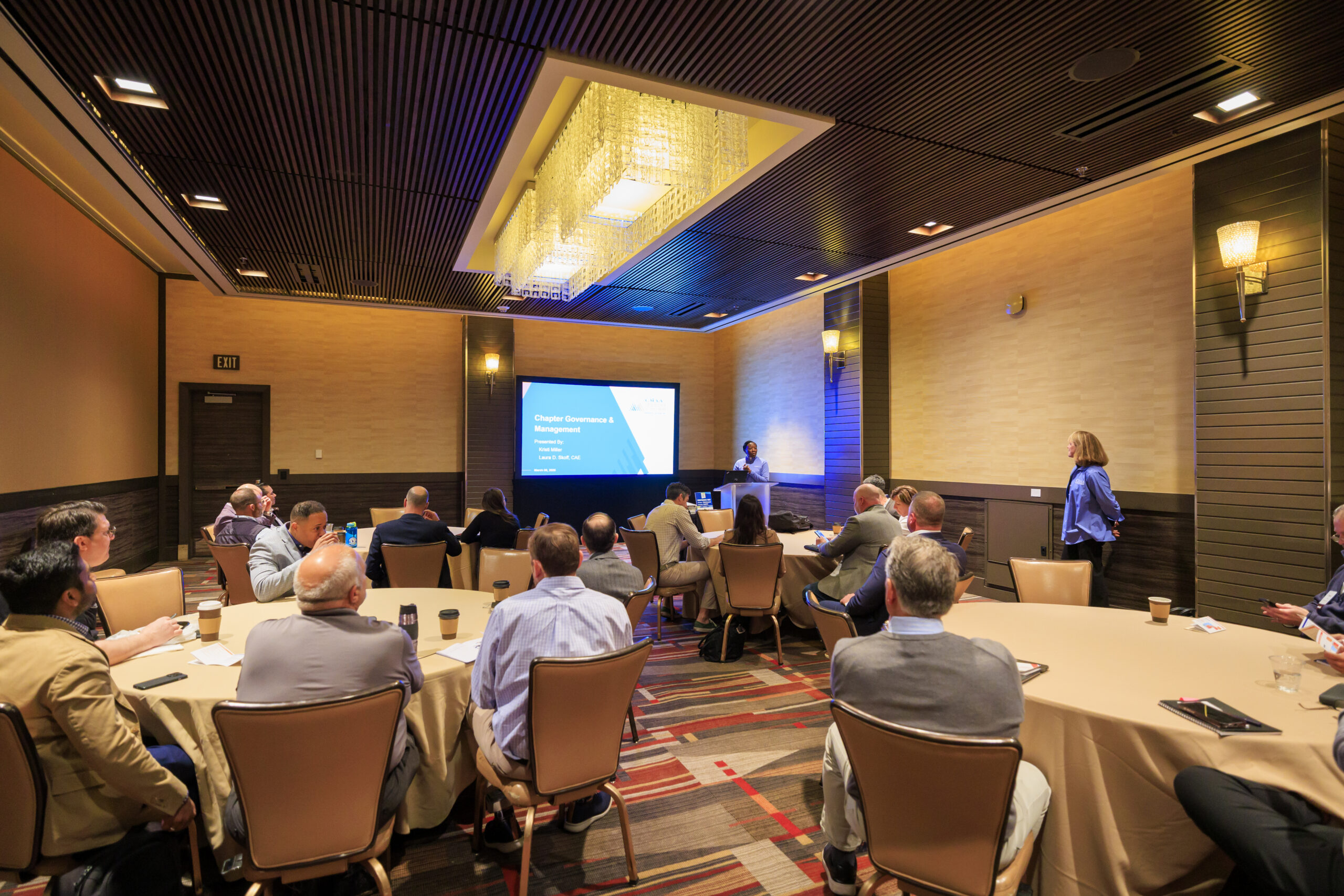
For a smaller main room, a dinner, any basic single-room show, a small crew is often 2–5 people.
Here’s what that might include:
- Production Manager/Producer – The client-side quarterback, also serving as show-caller
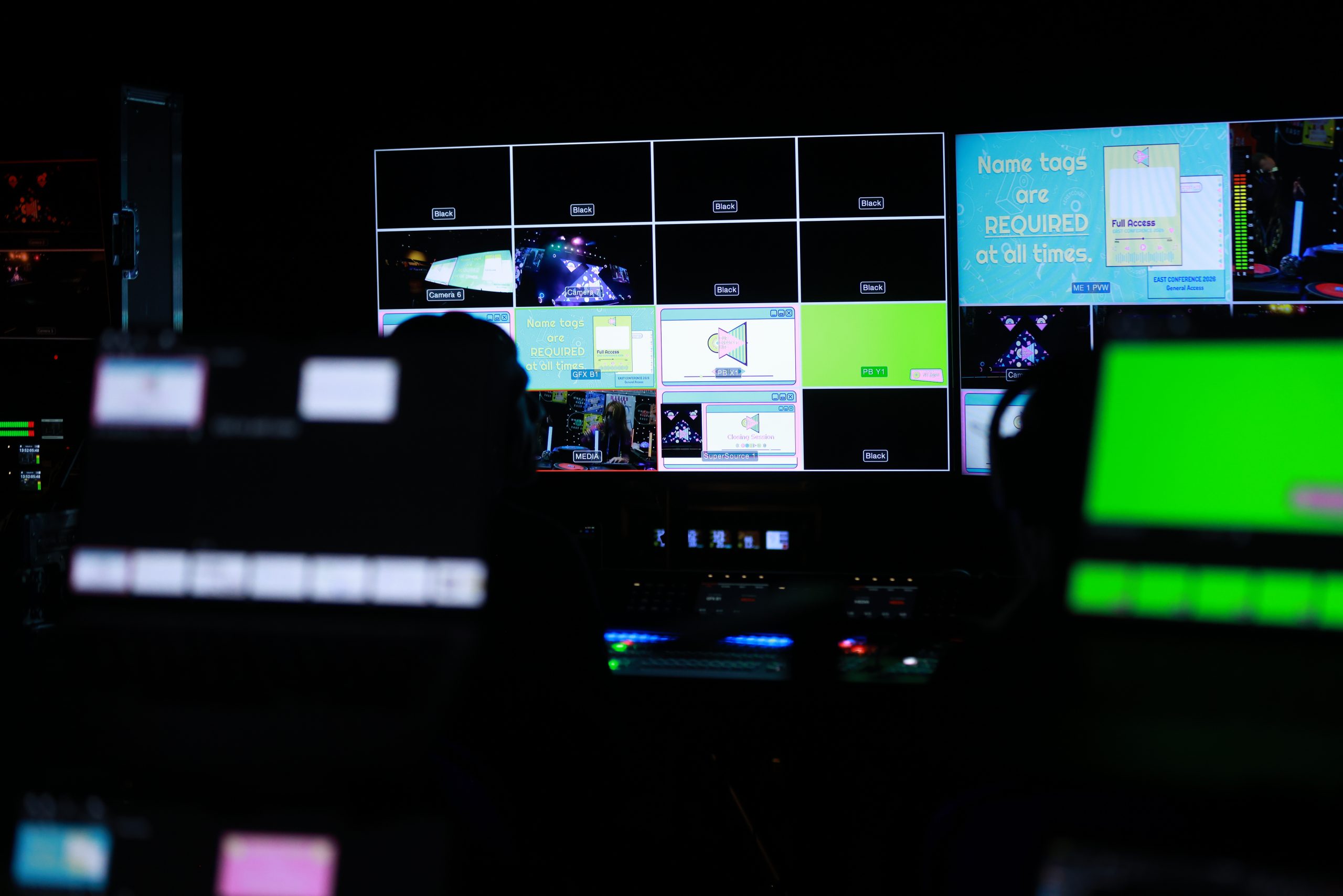
- Technical Director – The on-site technical lead, managing all gear and technicians.
- Video Tech – Running graphics, playback, switchers, and screens.
- Audio Tech – Mixing audio, handling microphones, music, and soundchecks.
- Lighting Tech (or sometimes shared) – Programming cues and looks.
In many of these smaller shows, one person wears multiple hats. Your video op will also be advancing slides. Your TD might also be helping serve with audio.
Want to know how they’re all communicating? Check out our recent blog on Comm Headsets, and why a well-designed comm system matters even with a small crew.
Medium Crew: Division of Labor
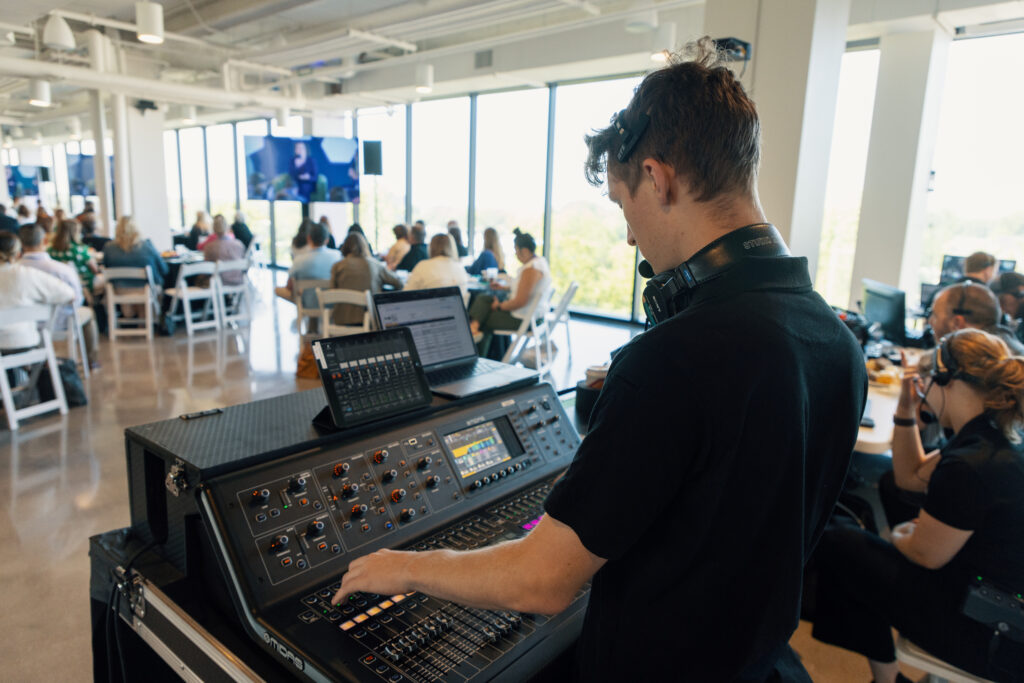
At this size, you’re likely in a larger ballroom, general session, or university space. Think 6–10 crew members, allowing each to specialize.
A sample medium crew might include:
- Producer or Show Caller – Working with talent and client flow.
- Technical Director – Running tech rehearsals and calling cues.
- A1 (Lead Audio) – Mixing the board, managing all sound.
- A2 (Audio Assist) – Mic’ing talent, steering wireless frequencies.
- Video Director – Calling cameras, switching the show, mainly for the in-room screens.
- Graphics/Playback Op – Dedicated graphics person wrangling PowerPoint/Keynote.
- Lighting Director (LD) – Programming and operating lighting.
- Stage Manager – Wrangling talent, furniture, and the front row seats for transitions.
- LED Tech – Managing LED Wall, formerly a Projectionist.
At this size, every role gets its own headset channel. Communication becomes more structured. This is where the Comm blog really starts to apply, and it’s also where misunderstandings cost more. Everyone’s working in sync, and clear roles make that possible.
Large Crew: High Stakes, High Specialization
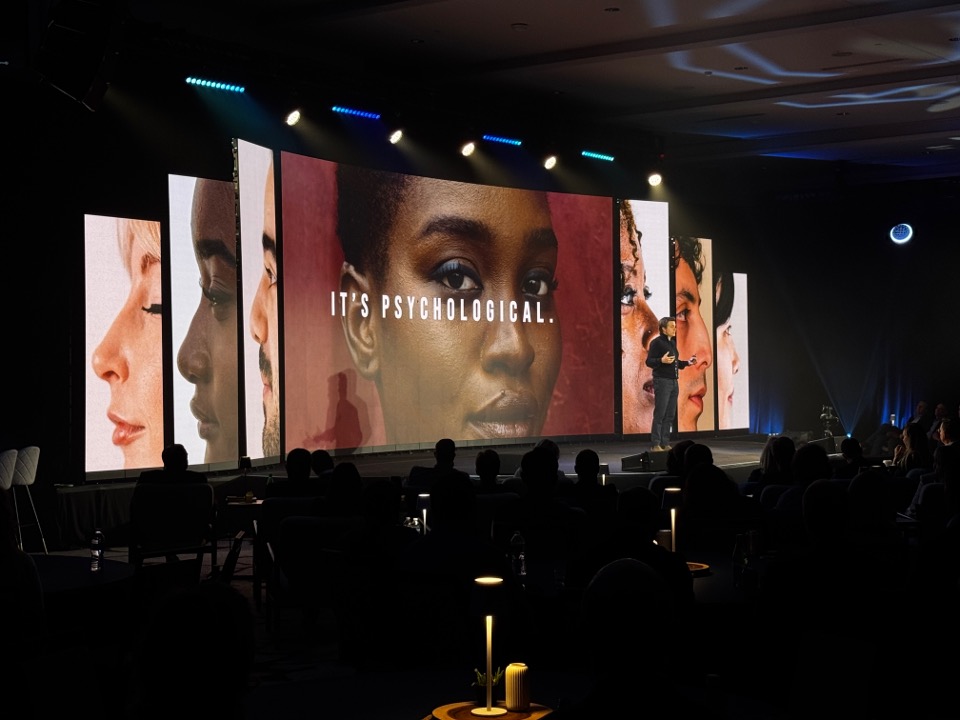
When you’re in an arena or running a multi-camera broadcast with LED walls, now you’re at 12–30 crew or more. These are your multi-camera streamed commencement ceremonies, tours, multi-stage conferences, or large-format festivals.
In addition to everything in the medium crew, a large team adds layers:
- Broadcast Director – Calling complex video cues for the audience watching remotely.
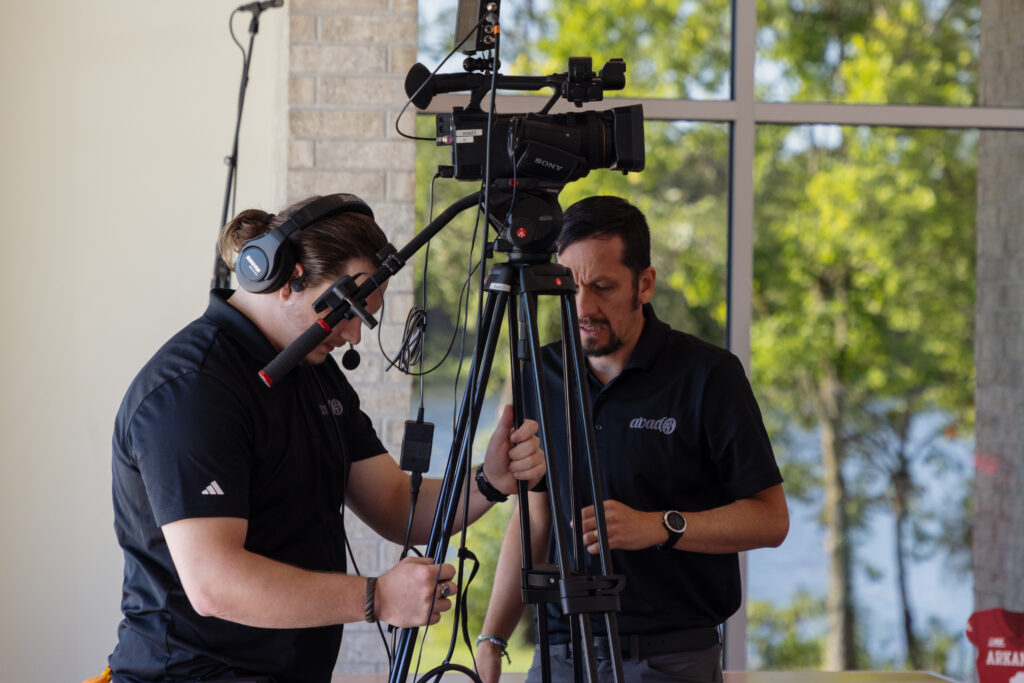
- Camera Ops – Often 3–6 operators with live feed responsibilities.
- Broadcast Mix Engineer – Mixing for the talent on-stage or broadcast audience.
- Monitor Engineer – Mixing for the talent.
- Riggers, Electricians – Safety-critical techs behind the scenes mainly during setup.
- Comm Tech – Managing multiple comm lines and packs.
- Stagehands – Supporting setup and strike, bolstering the show crew.
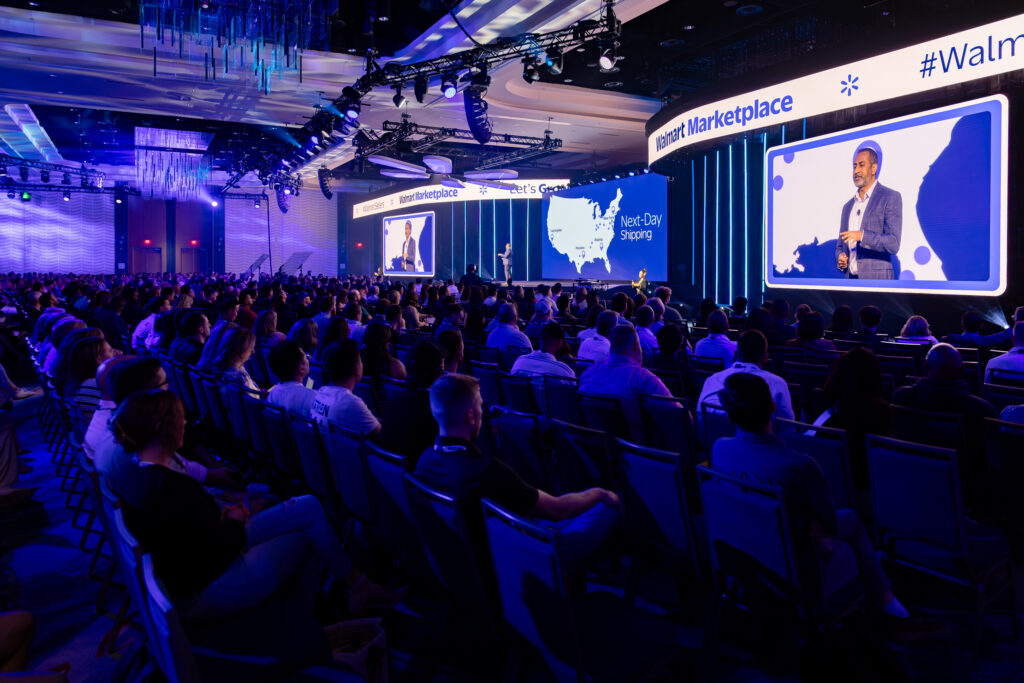
Photo by Iron Lotus Creative / Wesley Hitt
Want to Learn More?
If you’re looking at a quote or walking into a ballroom and wondering “who are all these people?”—you’re not alone.
We made a free downloadable Production Glossary to help decode the jargon and acronyms. It’s written with you in mind: planners, admins, coordinators, marketers, and anyone tasked with pulling off a successful event.
A Final Note
It’s tempting not to talk about this stuff. Every event is different. Roles change. Crew sizes flex. There are a thousand exceptions.
But in the absence of honest, beginner-friendly explanations, too many production decisions stay behind the curtain. That’s why we’re publishing this—not as gospel truth, but as a starting point. Something you can reference. Something we can build on together.
Because better shows start with better understanding. And we believe event planners deserve a seat at the production table, headset or not.