Imagine walking into a classic diner.
Maybe you have one in your hometown. Maybe you’re picturing your favorite movie scene where someone slides into a booth and the waitress walks over with a coffee pot. Almost every diner has a menu full of options, but somewhere on the board you’ll also find “Today’s Special.”
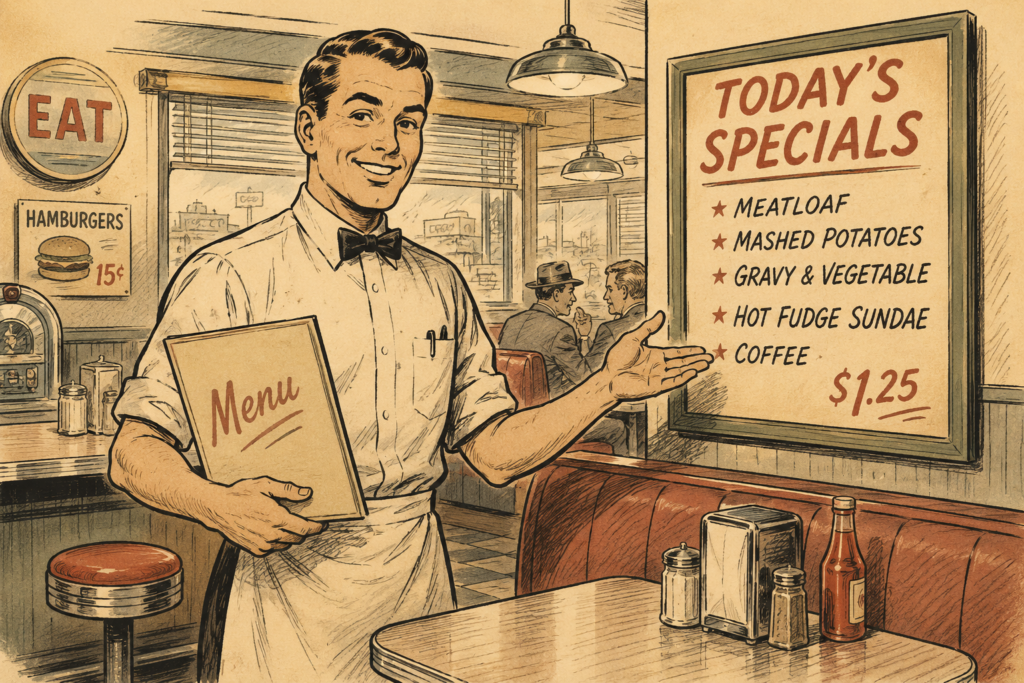
Why do restaurants do this?
The kitchen loves it when someone orders the special. It’s efficient. It’s something they know they can execute well. It helps guests who aren’t quite sure what they’re in the mood for. Instead of studying every option on the menu, they simply say, “I’ll have the special.”
Don’t get us wrong. The special is usually delicious. The reason it works is because the kitchen changes it. Monday isn’t the same as Thursday. They keep it fresh.
Now imagine if that diner served the exact same special every single day for years. Eventually it wouldn’t feel very special anymore.
The live event industry has its own version of that, we call it the AV “Two Screen Special.”
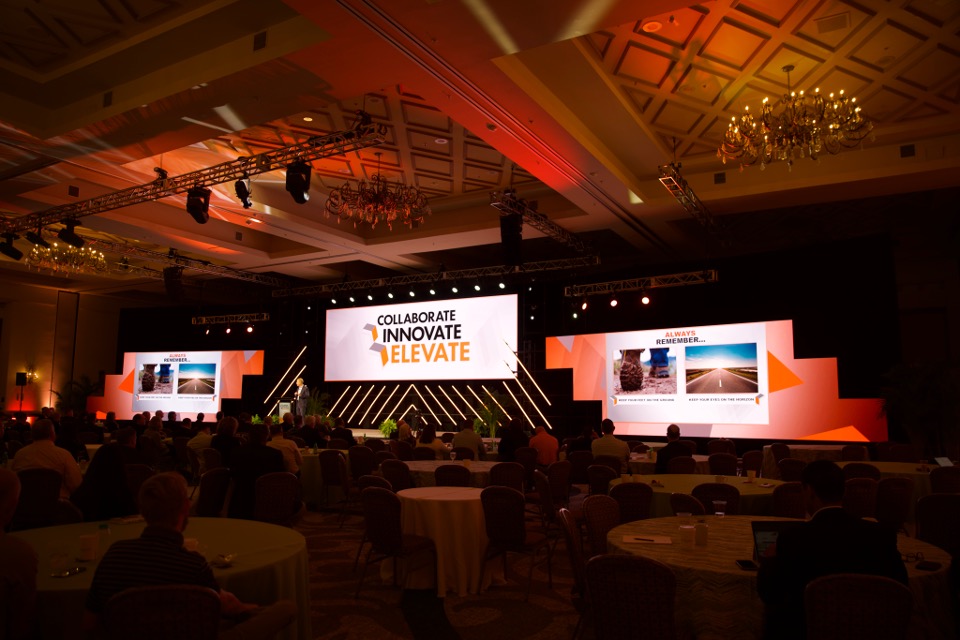
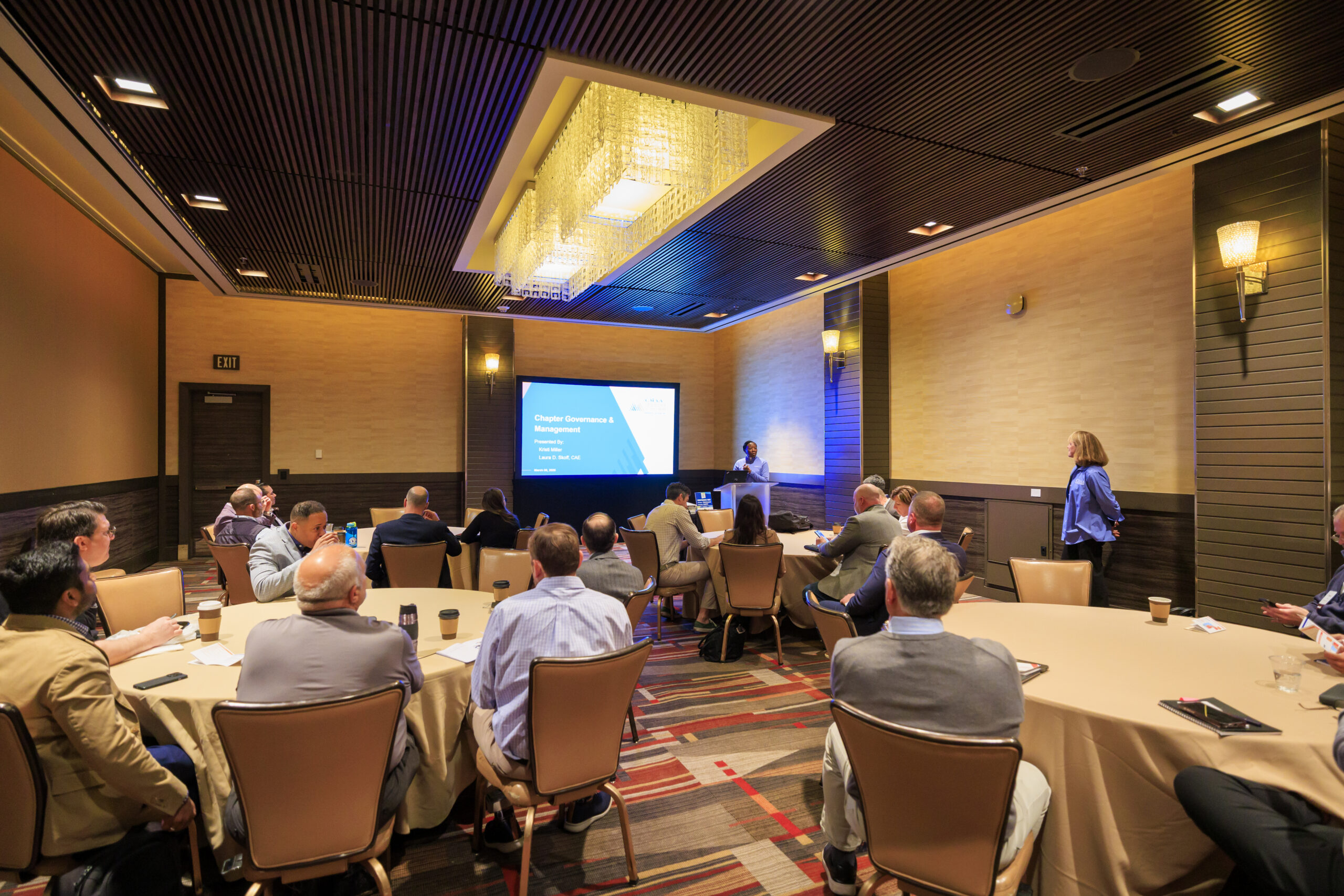
If you’ve attended enough conferences, you can probably picture it without much explanation. A stage across one end of the ballroom. Projection screens on the left and right. A podium in the middle. Black drape across the back wall.
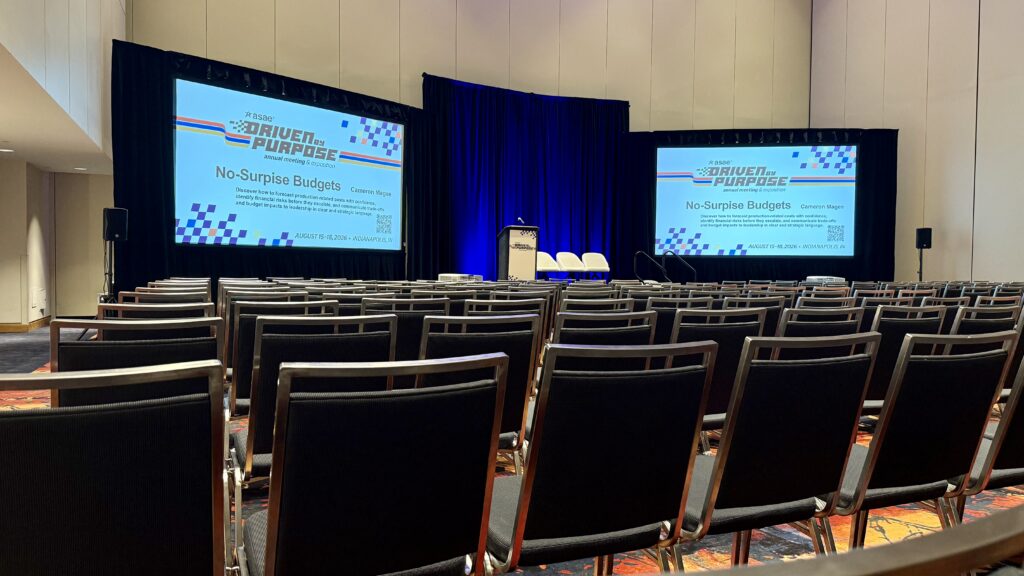
There is nothing inherently wrong with that layout. In fact, we’re guilty of producing plenty of events that looked exactly like it. The problem is when it becomes the default answer instead of one possible answer. If we’re not careful, an entire industry can slowly start to look the same.
You can walk through many cities and notice the same thing. Even modern skylines often become a collection of glass rectangles. Industrial parks are filled with pre engineered metal buildings that all share a similar shape. Drive through a cookie cutter neighborhood and you’ll quickly notice that many homes are almost identical.
Then, every once in a while, you see a custom home. It catches your attention because someone started with architecture instead of efficiency.
Those skyscrapers would never stand without engineers. Those industrial buildings exist because someone found a way to solve a problem efficiently and repeat that solution over and over. Engineering is about removing friction. It’s about finding the most effective way to accomplish a goal. Our industry naturally drifts in that direction too. When something works, we repeat it. Eventually it becomes the standard. Then the standard becomes the expectation.
That’s how the AV Two Screen Special happens.
At avad3, clients often refer to us as their A/V company. We certainly provide audio, video, and lighting, but we’ve always thought of ourselves a little differently. We’re an event production company. There is a meaningful difference between hiring an in house AV team and hiring a production company. We’ve written about that before, but one of the biggest differences usually comes down to lighting.
An AV team is focused on making sure people can hear the presenter, see the presentation, and that every piece of technology works correctly. A production company is thinking about how the room feels.
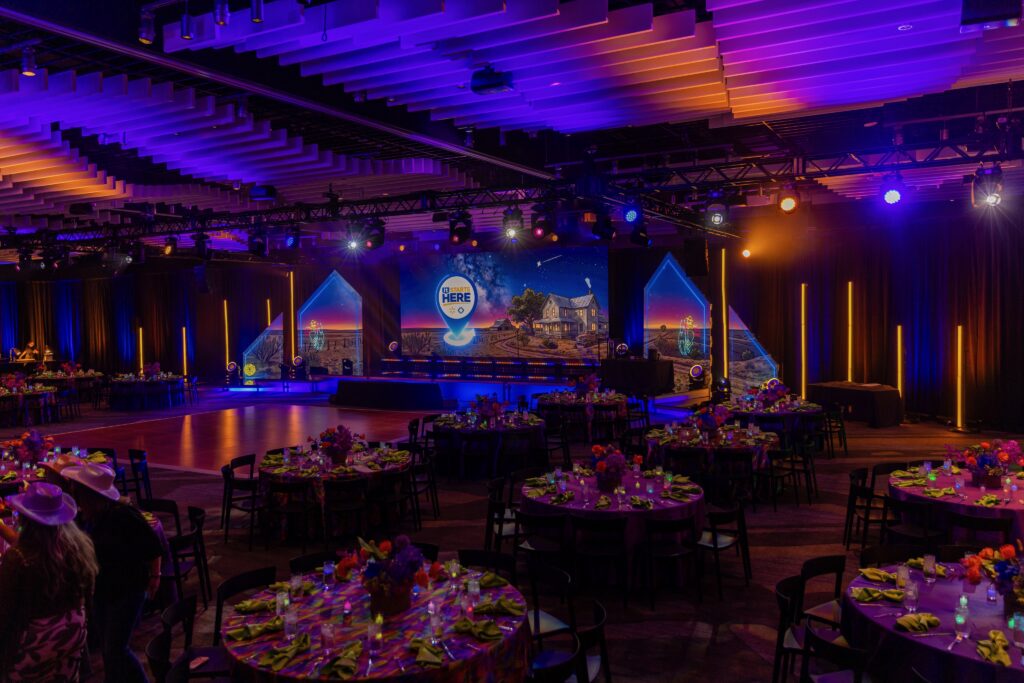
How does the stage create energy? How does it reinforce the message? How does it help attendees remember what they experienced long after the conference is over? Many times, the answer isn’t another screen. It’s thoughtful lighting. It’s depth. It’s texture. It’s creating an environment that supports the story being told on stage.
To be fair, we’re just as capable of serving the Two Screen Special as anyone else.
Sometimes ballroom ceiling heights limit what’s possible. Sometimes hotel load-in schedules don’t leave enough time to build something more ambitious. Sometimes budgets simply don’t allow it. We’ve had plenty of events where the traditional layout was absolutely the right solution. This article isn’t about criticizing those events. It’s about encouraging our industry to avoid getting stuck there.
Whether your audience is 200 people or 2,000 people, take a step back and look at a photo of your stage. Squint your eyes a little. Would someone immediately recognize your event, or could it be confused with hundreds of other conferences held this year? That’s a worthwhile question to ask.
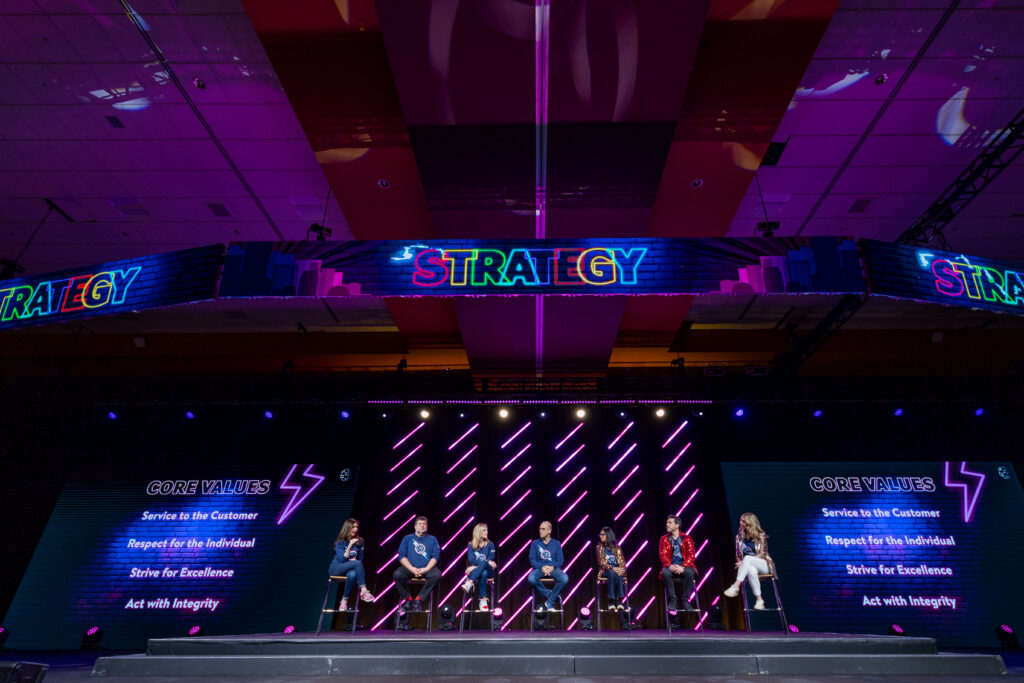
Photo by Iron Lotus Creative / Stephen Ironside
Fortunately, avoiding the Two Screen Special doesn’t require a Super Bowl halftime show budget. Some of our favorite designs have been created inside ordinary hotel ballrooms with realistic budgets and practical timelines. Creativity isn’t always about spending more money. Often it’s about approaching the room with a different perspective.
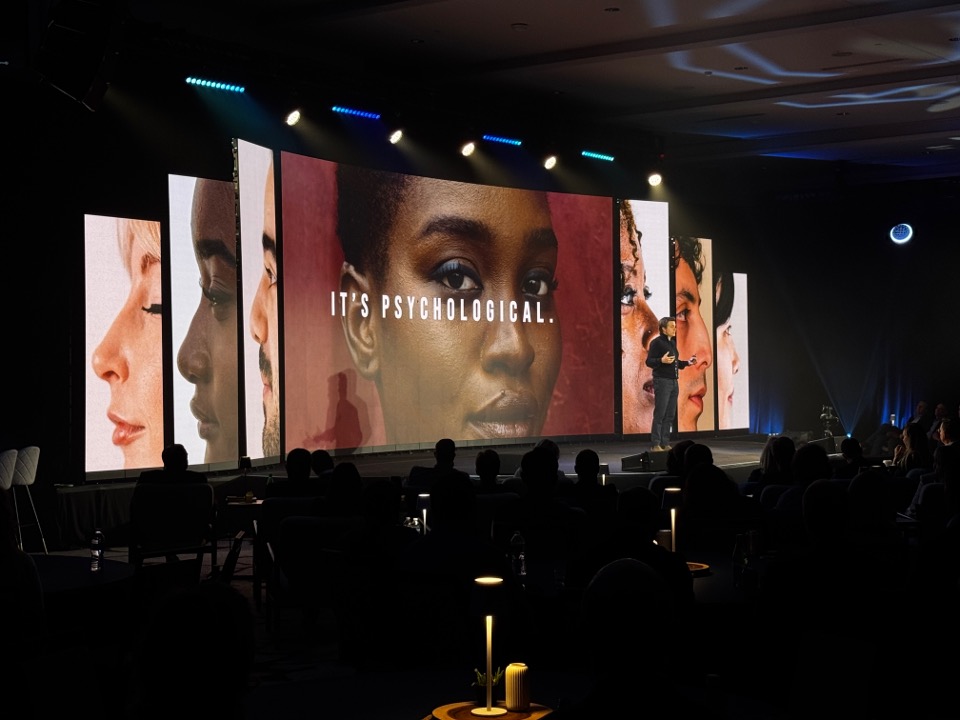
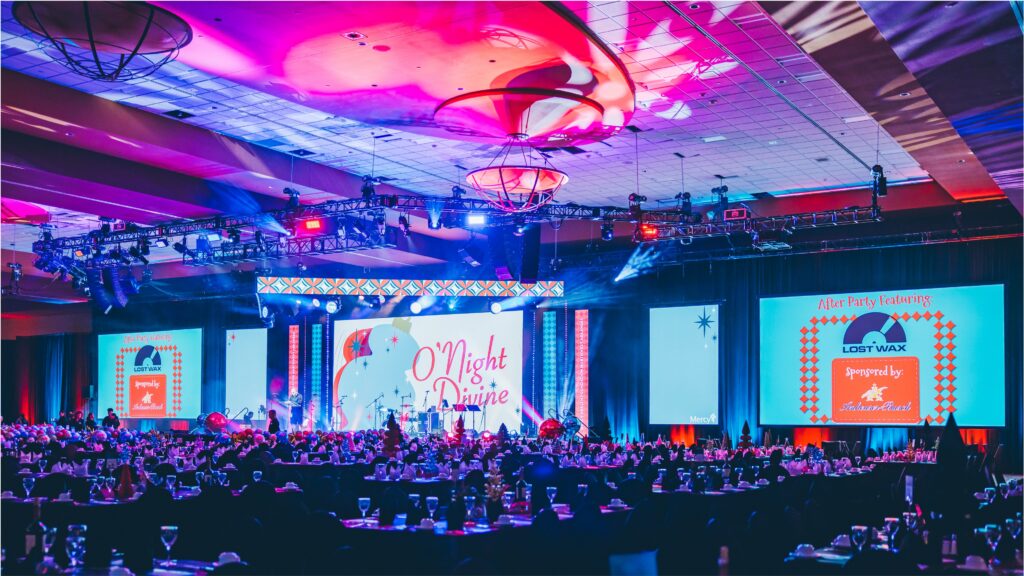
Maybe it’s an LED wall that isn’t traditional and 16:9 ratio. Maybe it’s scenic elements that add depth. Maybe it’s using lighting to create architecture where none existed before. Maybe it’s finding one thoughtful design element that gives attendees something memorable. The goal isn’t to be different simply for the sake of being different. The goal is to create a room that supports your message instead of settling for the industry’s default.
Below are a few examples from events we’ve had the privilege of producing. None of them had unlimited budgets. None of them had unlimited time. Each one simply challenged the idea that every conference stage has to look the same.
We hope they inspire you to look beyond the AV Two Screen Special and discover what’s possible for your next event.